Belzec - July 14

Memorial at Belzec


Memorial at Belzec


Map of Belzec and neighboring communities in Poland


Belzec is a small town located ten miles from the present-day Polish-Ukrainian border. In 1942 Germans established one of the first death camps. During the ten months of its existence approximately 450,000 Jews were killed. In 1944, SS and police authorities in Lublin District began construction of a killing center in Belzec. The killing center at Belzec began operations on March 17, 1942. It was the first stationary killing facility established by the SS and served as a training ground for future operations of that kin. Experience gained in Belzec was later applied at the other killing centers established later at Treblinka, Sobibor, and eventually Auschwitz-Birkenau.
Jews were brought to Belzec from ghettos nearby as well as those from the Lublin, Lwow, and Krakow Districts. Many of the victims were murdered during often brutal deportation actions. After arrival at Belzec, victims were told that they had arrived at a labor camp and needed to undress and take a shower. Victims had to run undressed along a narrow path that led directly into gas chambers labeled as showers. Once the doors were sealed, auxiliary police guards started an engine located outside the building. Carbon monoxide was funneled into the chambers, killing all those inside.
In October 1942, German SS and police began to exhume the mass graves at Belzec and burn the bodies. The Germans also used a mchine to crush bone fragments into powder. By late spring 1943, Jewish forced laborers, guarded by the SS had completed the task of exhuming the bodies, burning them, and dismantling the camp.
After the Belzec camp was dismantled, the Germans ploughed over the site, built a manor house there, and planted trees and crops to disguise the area as a farm. Soviet forces overran the region in July 1944.

In 2004 the US Holocaust Memorial Museum and its Polish partners completed an almost ten-year process of creating a new monument to the victims of Belzec.

Lublin - Majdanek - July 13, 2010


Barracks at Majdanek Concentration Camp


Guard Tower - Majdanek


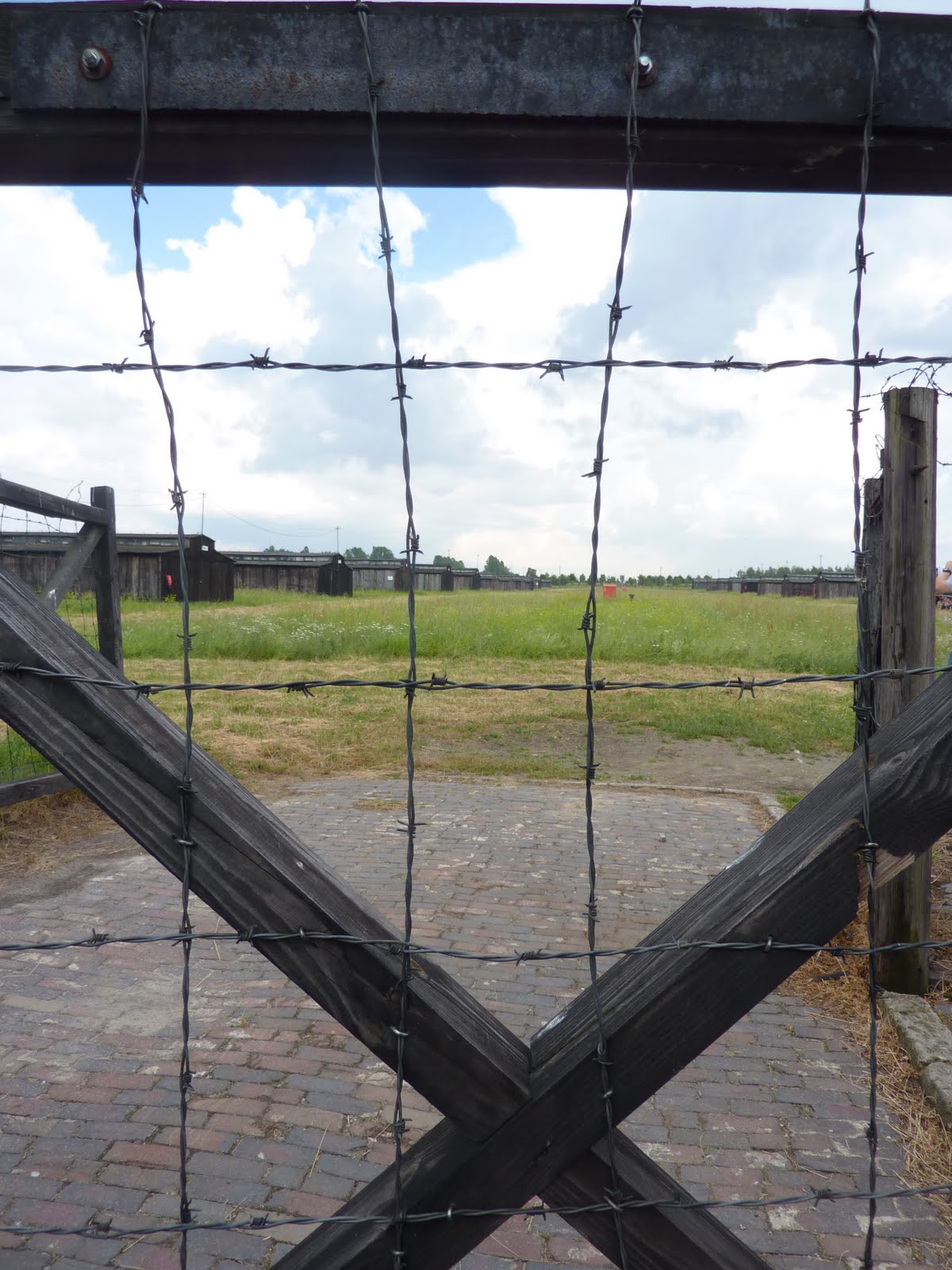
Barbed Wire Fence - looking in Majdanek


Black Crow on Fence - Majdanek


After a short bus ride, our group gathered for a briefing about our upcoming visit to Majdanek, a camp and killing center located four miles from the city, and unlike most camps, visible from all sides. Director Tomasz Kranz gave us a short intro to the history of the camp. Constructed in Oct. 1941, Majdanek served as a center for the realization of the so-called "Final Solution to the Jewish Question". The majority of the prisoners were Jews, mainly from Poland, but also from Czechoslovakia, Germany, Austria, and France. The second largest group of prisoners was Polish Catholics. Among an estimated 150,000 prisoners who entered Majdanek, 80,000 people, including 60,000 Jews, were killed. In order to remove the traces of the crimes, the Germans burned the corpses on pyres or in the crematorium. The camp occupied an area of 670 acres. On November 3, 1943, the largest single-day of killing in a single location during the Holocaust took place at Majdanek. The Red Army liberated the cap on July 23, 1944 making Majdanek the first concentration camp liberated by the Allies. Soon after the liberation, the first Holocaust museum was created there.

Our visit took place on a dreary and cloudy summer day. The air was filled with humidity and the clouds threatened rain. Large black crows flying in groups added to the eerie feeling of being in such a horrific place. Much of our group followed the group leader in entering the barracks, but several of us were unable to walk through the interior rooms. Emotions were hard for some of us to control as we came to the realization that Majdanek was the first of four camps that would tell the story of the Holocaust in such real terms.

Warsaw/Lublin - July 13, 2010

View from Room at the Grand Hotel Lublin


Facade of Building in Old Town, Lublin


Old Town, Lublin


Biblical Art on Church, Old Town, Lublin


The day began with the sun shining as we made our way from Warsaw to Lublin. Lublin is the ninth largest city of Poland. The city's history goes back as far as the 10th century when a significant fortification existed there. One of Poland's most prominent Jewish communities was established in Lublin in the 16th century. In 1518 a yeshiva was founded in Lublin to which students came from all over Europe. At the end of the 18th century Lublin became a Hasidic center. Throughout the 19th century, Jews constituted more than half of Lublin's inhabitants. Yeshiva Chachmei Lublin opened its doors in 1930 and instantly became a center of Jewish learning. A ghetto was established in Lublin in March, 1941 with around 34,000 inhabitants. Lublin and its district played an important role in the German plan of annihilation of the Jews. Lublin was the headquarters of the Operation Reinhard, the SS-run program to kill all the Jews in the four major death caps - Belzec, Sobibor, Treblinka and Majdanek. A majority of the 3 million Polish Jews killed in the Holocaust went through these caps or died during the deportation process. Almost all of the Lublin Jews were killed by the end of the war - about 30,000 were killed in Belzec - mostly between March 17 and April 11, 1942.

Warsaw - July 12, 2010


US Ambassador to Poland Mr. Lee Feinstein


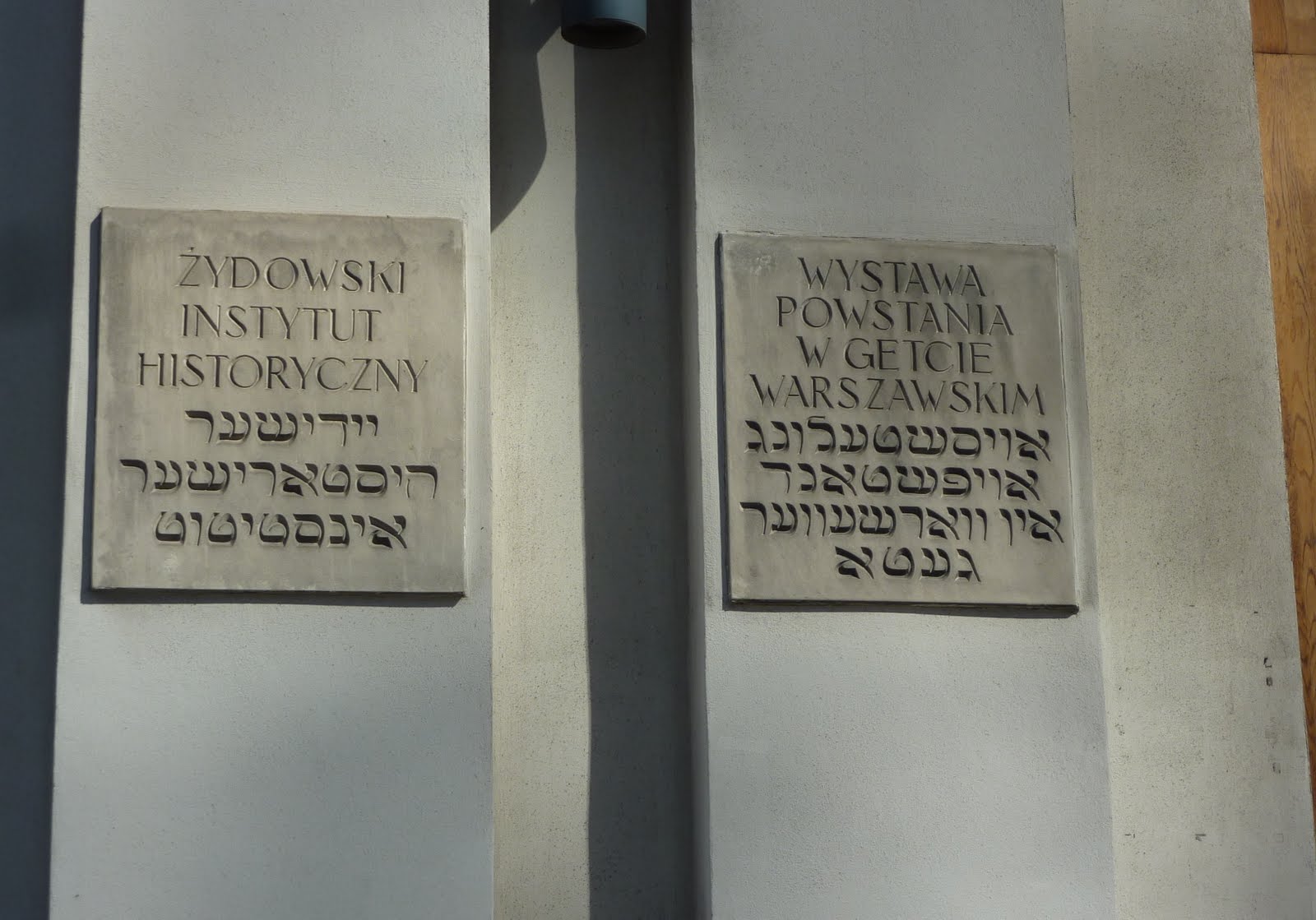
Restored Megillah at the Jewish Historical Institute, Warsaw, Poland


Area in Poland where my mother, Bella Magenheim, is from


Jewish Historical Institute in Warsaw, Poland


The morning began with a trip to the Jewish Historical Institute which focuses on the study of the history and culture of Polish Jews. It is the largest depository of Jewish-related archival documents,books, journals, ritual and art objects. After lunch we enjoyed a luncheon in honor of our group at the lovely residence of Ambassador and Mrs. Lee Feinstein. Invited guests included members of the Polish government as well as professors and lecturers at the University. The remainder of the day was spent at the Warsaw Uprising Museum. The museum is dedicated to the Warsaw Uprising of 1944. The museum collects and maintains hundreds of artifacts. The goals of the museum include the creation of an archive of historical information on the Uprising and the recording of the stories and memories of the still living Uprising participants.

Warsaw - July 11, 2010

Memorial to Warsaw Ghetto 1940-1943


Inscription Marking Warsaw Ghetto Walls 1940-1943


Okopowa Street Jewish Cemetery


Okopowa Street Jewish Cemetery


Ulica Mila - location of Mila 18


Memorial to Warsaw Ghetto


Monument to the Heroes of the Warsaw Ghetto

Our group's day begins with a briefing by our extraordinary tour guide, leader and expert in Jewish Poland, Jacek Nowakowski, the Polish born curator of acquisitions and research at the U.S. Holocaust Memorial Museum during breakfast at the Sheraton Hotel. Then we're off to our first day of touring. We drive to Memory Lane where we visit the monument to the Heroes of the Warsaw Ghetto, Mila 18, and Umschlagplatz. The Warsaw Ghetto Uprising was the Jewish resistance that arose within the Warsaw Ghetto in German occupied Poland during WWII. Mila 18 is the address of the headquarters bunker of Jewish resistance fighters who lived underneath the building at ulica Mila 18 (in English it is 18 Pleasant Street) The Umschlagplatz is the spot at the northern boundary of the Warsaw Ghetto where the Jews in the Warsaw Ghetto assembled to board the trains which transported them to the death camp at Treblinka, beginning in July, 1942. The last stop of the morning was at the Okopowa Street Jewish Cemetery. It is one of the largest Jewish cemeteries in Europe. The cemetery contains over 200,000 marked graves, as well as mass graves of victims of the Warsaw Ghetto.

Warsaw - July 10, 2010

Candle Memorial to Polish President Lech Kaczynski

"lody" means ice cream in Polish


Old Town - Warsaw, Poland


Presidential Palace - Warsaw, Poland


The last time that I was in Poland was in the summer of 1996, accompanied by my two sons, David and Jason, who at the time were teenagers, my father-in-law Myron and my father, Louis. We had gone to Poland to return to the small town that my father was born and grew up in before WWII. During the war, he was in hiding and was the only one of his family to survive. It was an incredibly emotional and moving trip for me. This time, I am returning to Poland for two reasons: 1) I am on a tour of Jewish Poland with the US Holocaust Memorial Museum - - a very in-depth study of the history of Jews in Poland before the war and 2) a personal mission to connect with two Polish Catholic families who were responsible for hiding my father during the war and, as such, saving his life. I am hoping to place their names in Yad Vashem in Israel as "Righteous Gentiles" -- those non-Jews who risked their lives for saving Jews during WWII I knew that it would be a difficult, emotional trip but it was something that my heart told me I had to pursue.
Flying into Warsaw and seeing it from the sky, it was hard to imagine the horrible scenes that took place here several decades ago. From my seat in the plane, the skies were blue, the land was green and lush. How could such evil have existed here?
I was met by our greeter from the museum and we began a half hour car ride to our hotel, the Sheraton Warsaw. After checking in, I went upstairs to meet my fellow tour members. Everyone had a different reason for attending the Mission to Poland and it was interesting to hear how varied those reasons were. Many people had relatives who had lost their lives during WWII and others were curious about the plight of Jews during the war. After a brief lunch, we took a short bus ride to the center of Warsaw. Just a few weeks before, the President of Poland, his wife, and many government dignitaries had lost their lives in a plane crash in Russia, and our first stop was to the Presidential Palace where a large memorial to the victims had been erected . Flowers and candles were everywhere and clearly the people of Poland were mourning their loss. As we continued our walk, we were soon in the Old Town. Typical of European old towns, the cobblestone streets, colorful buildings and quaint ambiance were a throwback to previous times. Restaurants, horse drawn carriages, people strolling on a beautiful day made the scene quite idyllic. After seeing the word "lody" at many ice cream shops, I realized that "lody" meant ice cream. As a child, my mother used the Polish word "Lalka" meaning doll. As we passed by a shop selling dolls, I realized that the store name was, in fact, "Lalka". Our tour led us to the former home of Mme. Curie. She was born in Warsaw and lived there until her twenties. Her full name was Marie Sklodowska Curie.
Our tour ended at a lovely, typically Polish restaurant in the area, called "AleGloria" where we were treated to a wonderful Polish meal. This was the beginning to a full week of sights and sounds -- some of which would be difficult to bear.

Paris - July 7, 2010

Jerome Dreyfuss - Paris


W.H. Smith - Paris


stained glass ceiling - Printemps Dept. Store - Paris


Annick Goutal - Paris


What would a trip to Paris be without shopping? The window shopping is phenomenal -- each "fenetre" perfectly displayed to entice the viewer. And entice they do. The imaginative and tasteful windows lured me in and before the shopkeeper said "bonjour" I was in fantasyland. On the main shopping boulevard, Boulevard Haussman, lie the two major department stores on the Right Bank - Galeries Lafayette www.galerieslafayette.com and Printemps www.printemps.com Both stores are several stories high and it takes hours to explore each department. My recent trip to Printemps was a huge success. I didn't realize that I had arrived during the month of "soldes", one of the two months where all of the shops in France hold their "soldes" or sales. (January is the other month -- but I much prefer to be in Paris during July than during January). The dollar is stronger than it has been in years so my purchases became even sweeter. One of the musts in Printemps is looking up at the stained glass domed ceiling from the top floor restaurant -- not to be missed. Also,the vast shoe department is a must for every shoeaholic.
WHSmith www.whsmith.fr/ is a Parisian English bookshop located at 248 Rue de Rivoli in the 1st Arrondisement. They have an extensive selection of English books, DVD's, newspapers and magazines. If you are looking for something that is unavailable in the shop, they will place a special order to get it for you. It's really a wonderful place to browse the latest editions of books, etc. Another lovely, small French chic shop in the 1st Arr. is Annick Goutal. It is a house of "Haute Parfumerie" offering the finest in French scents and skin care. Among the popular scents are "Eau d'Hadrien", " Petite Cherie", and " Ce Soir ou Jamais " (tonight or never).
Moving over to the Rive Gauche, you will be amazed at the selection of fine leather handbags, wallets and backpacks at Jerome Dreyfuss located at 1 Rue Jacob in the shopping mecca near Blvd. St. Germaine www.jerome-dreyfuss.com. His bags are French chic and never trendy. Made from the finest quality materials, Jerome Dreyfuss bags are quintessentially French.
Au revoir!! A bientot!!