Krakow - July 15, 2010

Torah Ark - Remuh Synagogue, Krakow


Kazimierz


Gates to entrance to Remuh Synagogue, Krakow


Interior of Tempel Synagogue - Krakow


Synagogue Doors - Krakow


Jews Forbidden - photo of sign in Krakow History Museum


Nazi insignia tiled floor - Krakow History Museum


Our day in Krakow begins with a trip to the Krakow History Museum. The museum is housed in what used to be the administrative building of what used to be the Oskar Schindler Factory. The museum shows the history of the factory in a broad historical context and provides visitors the opportunity to learn more about the history of Krakow under German occupation. After a brief lunch at Szara's, we began our walking tour of Kasimierz. It is best known for being home to a Jewish community from the 14th century until WWII. The town was founded in 1335 by King Kasimierz where it once thrived as a community of tolerance between Christians and Jews. Through the years, Kazimierz became a town with walls separating the two religions and in 1791, it lost its status as a separate city and became a district of Krakow. The death knell of Jewish Krakow was sounded in 1939 when the Germans invaded and occupied Poland. After the war, Kazimierz was mostly deserted by its pre-war Jewish population and became a poor and dangerous neighborhood. Many old buildings were not repaired after the war devastation. Since 1988, a popular annual Jewish Cultural Festival has drawn Krakovians back to Kazimierz and re-introduced Jewish culture to a generation of Poles who have grown up without Poland's historic Jewish community. A Jewish youth group now meets weekly in Kazimierz and the Remuh Synagogue actively services a small congregation of mostly elderly Jews.
Our next stop was the Galicia Jewish Museum which commemorates victims of the Holocaust and celebrates the Jewish culture of Galicia. It hopes to educate Poles and Jews about their own histories. It is home to the internationally acclaimed permanent photographic exhibition, Traces of Memory.

Lancut - July 14, 2010

Interior of Lancut synagogue


Hebrew inscription - Lancut synagogue


Interior Wall of Lancut synagogue


Stones from Jewish Cemetery - Lancut, Poland


Ten Commandments above the Torah Ark - Lancut synagogue


Prior to WWII, Lancut had a thriving Jewish community, which made up about one-third of the town's population. Local Jewish cemeteries are the resting place of famous rabbis, and every year Hasidim come to pray at their graves.
The Lancut Synagogue, built in 1761, has a plain exterior, but its interior walls and ceiling are beautifully decorated with stucco work and paintings from the 18th through the 20th centuries. The synagogue is a rare surviving example of the four-pillar, vaulted synagogues built throughout the Polish lands in both wood and masonry from the 16th through the early 19th centuries.
The synagogue was set on fire during World War II, but survived because of its masonry construction. It was then used for storage of grain during the war. In 1956, with no Jews residing in Lancut, the town council proposed destroying the building. A member of the community persuaded the council to preserve the building as a museum and memorial to Lancut's destroyed Jewish community.

Belzec - July 14

Belzec Memorial


monument to Rzeszow - at Belzec


listing of names at Belzec - Mindel, my Yiddish name


layers of wood to resemble train tracks - Belzec Memorial


Upon arriving at the Belzec Memorial, the site of the first stationary killing facility established by the SS, I knew that this would be an emotional experience. The summer skies continued to be gray and full of humidity which gave the experience an intensity that was indescribable. The area of the memorial was huge -- and was filled with hundreds of thousands of rocks as far as the eye could see. In the distance were huge forests of green bordering the memorial. Our small group seemed inconsequential compared the vastness of the area. One could never imagine the scene here in the 1940's when this vast area knew only murder and annihilation. Scattered throughout the memorial were walls with sacred words written in Hebrew, Polish and English. One wall listed the first names of Polish Jews. Because the names of the real victims were unknown, this wall gave the victims some sense of identity. Among the names that stood out for me were Yiddish names that I knew from my own family. My Yiddish name is Mindl....my mother's name is Bajla, my aunt's name is Syma and my father's name was Lemel. The personal significance was deeply emotional for me and it was impossible to hold back the tears.
In addition to the names of people there were plaques naming the communities where the victims were from -- among them, Izbica, Zamosc, Rzeszow, Tarnow, and Lancut. These names were familiar to me from the stories that my parents had told me throughout the years.
As I entered the walking path to the memorial, I realized that the walls on either side of me became higher and the feeling of walking into an unknown place surrounded by thick concrete walls must have been similar to the feelings of victims walking into the unknown. This feeling was incredibly poignant and terrifying. Who could ever imagine the horrors?
As we left the memorial, we noticed one last piece of construction -- large pieces of wood put together to resemble railroad tracks -- another horrific symbol of the events that took place here.

Belzec - July 14

Memorial at Belzec


Memorial at Belzec


Map of Belzec and neighboring communities in Poland


Belzec is a small town located ten miles from the present-day Polish-Ukrainian border. In 1942 Germans established one of the first death camps. During the ten months of its existence approximately 450,000 Jews were killed. In 1944, SS and police authorities in Lublin District began construction of a killing center in Belzec. The killing center at Belzec began operations on March 17, 1942. It was the first stationary killing facility established by the SS and served as a training ground for future operations of that kin. Experience gained in Belzec was later applied at the other killing centers established later at Treblinka, Sobibor, and eventually Auschwitz-Birkenau.
Jews were brought to Belzec from ghettos nearby as well as those from the Lublin, Lwow, and Krakow Districts. Many of the victims were murdered during often brutal deportation actions. After arrival at Belzec, victims were told that they had arrived at a labor camp and needed to undress and take a shower. Victims had to run undressed along a narrow path that led directly into gas chambers labeled as showers. Once the doors were sealed, auxiliary police guards started an engine located outside the building. Carbon monoxide was funneled into the chambers, killing all those inside.
In October 1942, German SS and police began to exhume the mass graves at Belzec and burn the bodies. The Germans also used a mchine to crush bone fragments into powder. By late spring 1943, Jewish forced laborers, guarded by the SS had completed the task of exhuming the bodies, burning them, and dismantling the camp.
After the Belzec camp was dismantled, the Germans ploughed over the site, built a manor house there, and planted trees and crops to disguise the area as a farm. Soviet forces overran the region in July 1944.

In 2004 the US Holocaust Memorial Museum and its Polish partners completed an almost ten-year process of creating a new monument to the victims of Belzec.

Lublin - Majdanek - July 13, 2010


Barracks at Majdanek Concentration Camp


Guard Tower - Majdanek


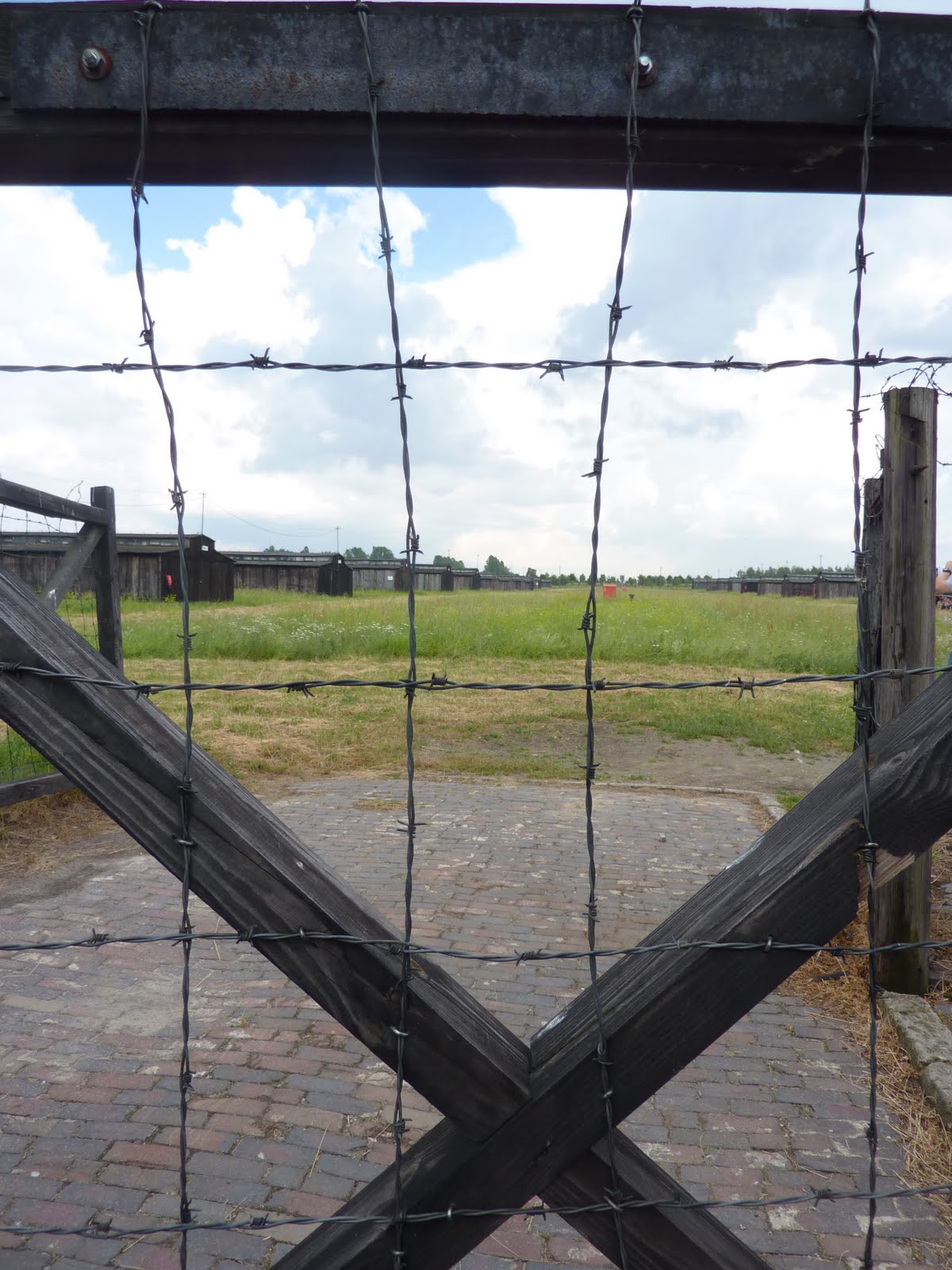
Barbed Wire Fence - looking in Majdanek


Black Crow on Fence - Majdanek


After a short bus ride, our group gathered for a briefing about our upcoming visit to Majdanek, a camp and killing center located four miles from the city, and unlike most camps, visible from all sides. Director Tomasz Kranz gave us a short intro to the history of the camp. Constructed in Oct. 1941, Majdanek served as a center for the realization of the so-called "Final Solution to the Jewish Question". The majority of the prisoners were Jews, mainly from Poland, but also from Czechoslovakia, Germany, Austria, and France. The second largest group of prisoners was Polish Catholics. Among an estimated 150,000 prisoners who entered Majdanek, 80,000 people, including 60,000 Jews, were killed. In order to remove the traces of the crimes, the Germans burned the corpses on pyres or in the crematorium. The camp occupied an area of 670 acres. On November 3, 1943, the largest single-day of killing in a single location during the Holocaust took place at Majdanek. The Red Army liberated the cap on July 23, 1944 making Majdanek the first concentration camp liberated by the Allies. Soon after the liberation, the first Holocaust museum was created there.

Our visit took place on a dreary and cloudy summer day. The air was filled with humidity and the clouds threatened rain. Large black crows flying in groups added to the eerie feeling of being in such a horrific place. Much of our group followed the group leader in entering the barracks, but several of us were unable to walk through the interior rooms. Emotions were hard for some of us to control as we came to the realization that Majdanek was the first of four camps that would tell the story of the Holocaust in such real terms.

Warsaw/Lublin - July 13, 2010

View from Room at the Grand Hotel Lublin


Facade of Building in Old Town, Lublin


Old Town, Lublin


Biblical Art on Church, Old Town, Lublin


The day began with the sun shining as we made our way from Warsaw to Lublin. Lublin is the ninth largest city of Poland. The city's history goes back as far as the 10th century when a significant fortification existed there. One of Poland's most prominent Jewish communities was established in Lublin in the 16th century. In 1518 a yeshiva was founded in Lublin to which students came from all over Europe. At the end of the 18th century Lublin became a Hasidic center. Throughout the 19th century, Jews constituted more than half of Lublin's inhabitants. Yeshiva Chachmei Lublin opened its doors in 1930 and instantly became a center of Jewish learning. A ghetto was established in Lublin in March, 1941 with around 34,000 inhabitants. Lublin and its district played an important role in the German plan of annihilation of the Jews. Lublin was the headquarters of the Operation Reinhard, the SS-run program to kill all the Jews in the four major death caps - Belzec, Sobibor, Treblinka and Majdanek. A majority of the 3 million Polish Jews killed in the Holocaust went through these caps or died during the deportation process. Almost all of the Lublin Jews were killed by the end of the war - about 30,000 were killed in Belzec - mostly between March 17 and April 11, 1942.

Warsaw - July 12, 2010


US Ambassador to Poland Mr. Lee Feinstein


Restored Megillah at the Jewish Historical Institute, Warsaw, Poland


Area in Poland where my mother, Bella Magenheim, is from


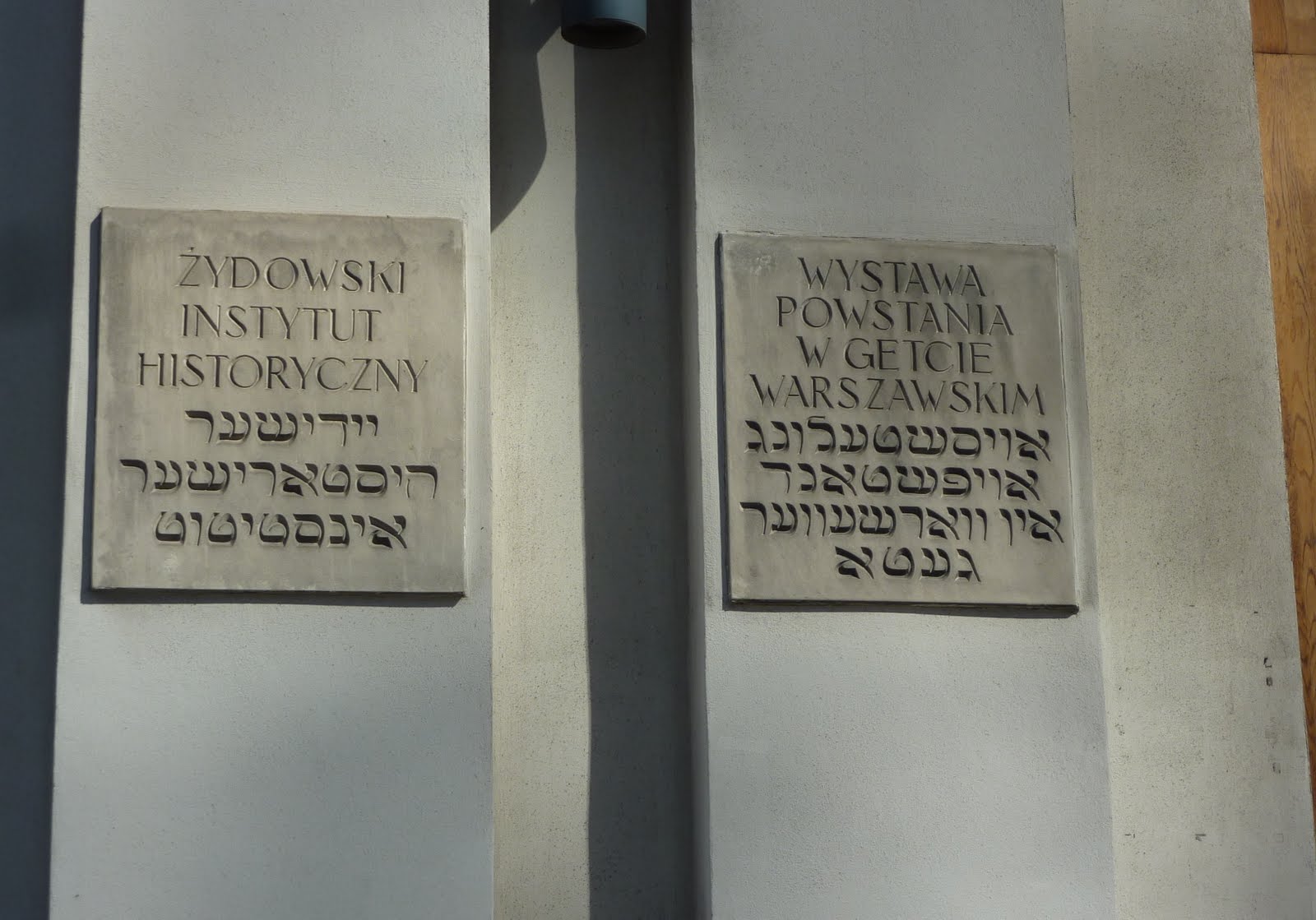
Jewish Historical Institute in Warsaw, Poland


The morning began with a trip to the Jewish Historical Institute which focuses on the study of the history and culture of Polish Jews. It is the largest depository of Jewish-related archival documents,books, journals, ritual and art objects. After lunch we enjoyed a luncheon in honor of our group at the lovely residence of Ambassador and Mrs. Lee Feinstein. Invited guests included members of the Polish government as well as professors and lecturers at the University. The remainder of the day was spent at the Warsaw Uprising Museum. The museum is dedicated to the Warsaw Uprising of 1944. The museum collects and maintains hundreds of artifacts. The goals of the museum include the creation of an archive of historical information on the Uprising and the recording of the stories and memories of the still living Uprising participants.